




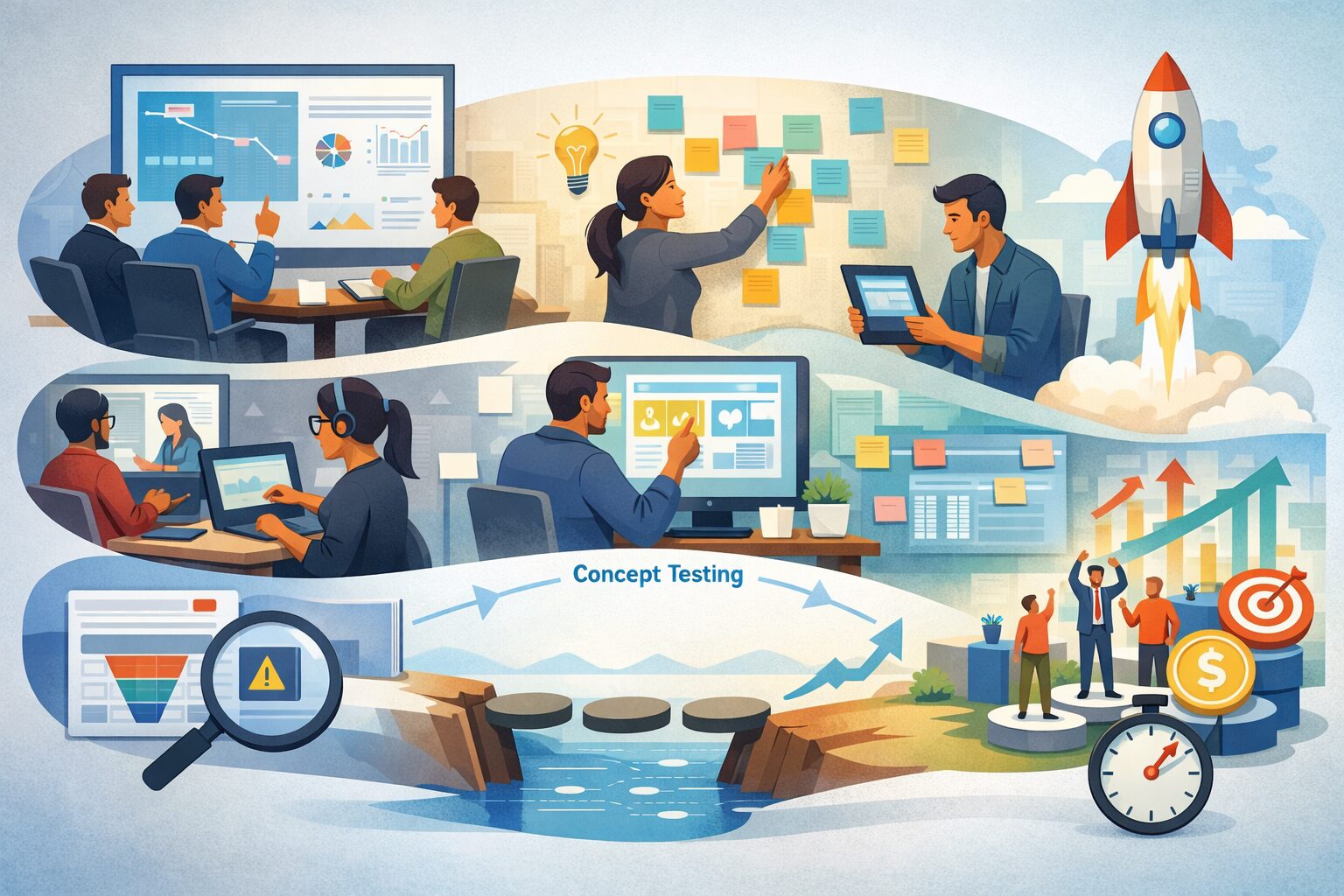
When growth stalls, teams blame marketing. Most of the time, friction inside the product is the real tax—on conversion, retention, and support cost. Executives do not need more opinions. Executives need evidence: where users drop, why users hesitate, and what fixes move the numbers. A UX research agency turns guesswork into a decision system—fast, unbiased, and tied to business outcomes.
If engagement is flat, abandonment is rising, or roadmaps keep shifting, the problem is not effort. The problem is missing a signal.The agency delivers clarity on three things: what to build, what to fix first, and what to stop funding.
The Critical Role of User Experience in Today’s Digital Landscape
User Experience (UX) has moved far beyond a mere buzzword; it’s now a fundamental pillar of business success. From mobile applications to complex enterprise software, the quality of the user experience directly impacts everything from customer satisfaction and brand loyalty to conversion rates and market share. Businesses that prioritize UX are not just staying competitive; they are actively shaping the future of their industries.
Ignoring UX, however, comes at a significant cost. Top design performers outpace peers materially. McKinsey found top-quartile design companies delivered +32 percentage points higher revenue growth and +56 points higher total returns to shareholders over five years. Conversely, poor experiences destroy repeat behavior. 88% of online consumers report being less likely to return after a bad experience. In other words: UX is not a polish layer. UX is a revenue and efficiency lever.
What Exactly Does a UX Research Agency Do?
A UX research agency produces decision-grade insight: where value leaks, what users need next, and which fixes change behavior. They employ a comprehensive toolkit of methodologies, moving far beyond simple surveys to provide deep, actionable insights. Methods matter less than outcomes. The right study answers one of four executive questions: Where is growth blocked? What is the highest-impact fix? What should the roadmap prioritize? What risks can be removed before launch?
Typical work includes usability testing, stakeholder and user interviews, concept validation, information architecture testing, and journey diagnostics—selected based on the business decision on the table.The mission is simple: reduce risk, increase adoption, and shorten time-to-value
Specialized Methodologies for Diverse Needs
The beauty of working with a dedicated UX research agency is their ability to select and combine the most appropriate research methodologies for your unique challenges. Whether you need to validate a new product concept, diagnose usability issues in an existing interface, or understand broader market trends, they possess the methodological flexibility to deliver precise answers. A competent agency maps method to decision:
- New product bet: concept testing + problem validation
- Conversion leak: usability testing + funnel diagnosis
- Navigation confusion: card sorting + tree testing
- Enterprise adoption: workflow research + role-based usability
Signs You Might Need to Engage a UX Research Agency
Recognizing the right time to bring in external UX research expertise can be a game-changer for your business. Many organizations encounter common symptoms that point towards underlying user experience challenges. If you’re experiencing any of these issues, it might be a clear signal that a specialized UX research agency can provide the clarity and direction you need.
Perhaps your website or application is seeing high bounce rates, indicating users are leaving quickly without engaging. Or maybe your conversion rates for key actions, like purchases or sign-ups, are stagnant despite your best marketing efforts. These quantitative metrics often hint at usability hurdles or a disconnect between your product and user expectations that require deeper investigation.
When teams argue direction, research becomes governance. It replaces debate with proof.If you’re launching a new product or feature and want to validate its market fit and usability before a costly full-scale release, a UX research agency can provide crucial pre-launch insights. Finally, if your current resources are stretched thin, or you simply lack the specialized skills in-house to conduct robust, unbiased research, partnering with a UX research agency becomes not just beneficial, but often essential.
Key Benefits of Collaborating with a Specialized UX Research Agency
Engaging a UX research agency isn’t just about outsourcing a task; it’s about gaining a strategic partner that brings a wealth of advantages to your organization. Their specialized focus and external perspective can unlock insights and efficiencies that are difficult to achieve internally.
Firstly, you gain access to a diverse pool of expertise and cutting-edge methodologies. These agencies employ seasoned researchers who are deeply familiar with the latest techniques, tools, and best practices in the field. They’ve conducted research across numerous industries and product types, bringing a breadth of experience that few in-house teams can match. This means they can design more effective studies, recruit more representative participants, and extract richer, more reliable data.
Secondly, a UX research agency provides an invaluable unbiased perspective. Internal teams, while deeply knowledgeable about their product, can sometimes be too close to it, leading to confirmation bias or overlooking critical flaws. An external UX research agency approaches your product with fresh eyes, offering objective insights free from internal politics or preconceived notions. This neutrality is crucial for uncovering uncomfortable truths about your user experience that can lead to significant improvements.
Maximizing Your ROI with Expert UX Research agency
The long-term cost-effectiveness and efficiency of working with a UX research agency are significant. While there’s an initial investment, the ability to rapidly conduct thorough research, identify critical issues early, and provide actionable recommendations can save immense resources down the line. Avoiding costly redesigns, reducing development waste on unwanted features, and increasing user retention translate directly into a stronger return on investment. Experience drives purchase behavior. PwC reports 73% of customers say experience is an important factor in purchasing decisions.
How to Choose the Right UX Research Agency for Your Business
Selecting the ideal UX research agency requires careful consideration, as the right partnership can significantly impact the success of your project. It’s not just about finding a provider, but finding a true collaborator who understands your vision and can effectively translate it into actionable insights.
Start by evaluating their experience and portfolio. Look for an agency with a proven track record, particularly in your industry or with similar product types. Review case studies and client testimonials to understand their past successes and the tangible outcomes they’ve delivered. Next, delve into their methodological approach. Do they have a flexible and comprehensive toolkit, or do they lean heavily on just a few techniques? Ensure their proposed research plan aligns with your specific questions and goals.
Communication and collaboration style are also paramount. You’ll be working closely with this agency, so assess how they communicate, their responsiveness, and their willingness to integrate with your existing team. A good UX research agency acts as an extension of your own. Finally, consider cultural fit and transparency. A strong partnership is built on trust, clear expectations, and open dialogue. Ensure they are transparent about their processes, pricing, and potential limitations, fostering a collaborative environment where insights can flourish.
The Process: What to Expect When Working with an Agency
When you partner with a UX research agency, you’re typically embarking on a structured, phased journey designed to maximize efficiency and deliver clear, actionable results. Understanding this process can help you set expectations and prepare for a successful collaboration.
The journey usually begins with a Discovery and Scoping phase. Here, the agency will work closely with your team to understand your business objectives, target audience, existing product challenges, and specific research questions. They’ll define the scope of work, propose suitable methodologies, outline timelines, and provide a detailed proposal. This ensures everyone is aligned on the goals and expected outcomes before any research begins.
Following this, the Research Execution phase kicks in. This is where the agency actively conducts the agreed-upon studies, whether that involves recruiting participants, running usability tests, facilitating interviews, or distributing surveys. They handle all the logistical complexities, ensuring data is collected rigorously and ethically. Once data collection is complete, the Analysis and Reporting phase begins. The UX research agency synthesizes all the raw data, identifies patterns, uncovers key findings, and translates complex information into clear, understandable insights. You’ll receive comprehensive reports, often including presentations, executive summaries, and raw data where appropriate.
Finally, and perhaps most importantly, the UX research agency provides actionable Recommendations and often offers Implementation Support. They won’t just tell you what’s wrong; they’ll tell you how to fix it, offering practical, prioritized suggestions for improving your product based on their research findings. Many agencies also offer guidance or workshops to help your internal teams effectively integrate these recommendations into your development cycle, ensuring that the valuable insights gained lead to tangible improvements in your user experience.
Investing in Understanding: The Path to a Superior User Experience
In a world where digital experiences dictate commercial success, the clarity and depth of user understanding provided by a professional UX research agency are indispensable. They don’t just gather data; they provide the insights that empower you to make informed decisions, mitigate risks, and build products that genuinely resonate with your audience. By leveraging their expertise, unbiased perspective, and cutting-edge methodologies, you’re not just improving your product; you’re investing in a superior competitive position and fostering lasting customer loyalty.
Do not fund roadmaps on intuition. Fund roadmaps on evidence. The path to higher engagement, better conversions, and ultimately, greater success, begins with truly understanding your users. Bring in a research partner when the cost of being wrong is higher than the cost of finding out.artner when the cost of being wrong is higher than the cost of finding out.
Until next time explore webkeyz’s case studies
and Keep Thinking!