




Most executives view design as a cosmetic layer applied at the end of product development. They issue RFPs looking for a „UX company“ to polish an interface or refresh a color palette. This is a fundamental capital allocation error. If you are hiring an external agency solely to make your digital products look appealing, you are leaving significant market share on the table.
In the modern economy, User Experience (UX) is not art; it is risk mitigation and revenue assurance. It is the primary differentiator in markets where technology has become commoditized. When competitors have access to the same cloud infrastructure and the same development frameworks, the only remaining variable is how effectively a customer can extract value from your service.
As MENA’s first UX Design and Innovation Agency, we have seen this dynamic play out repeatedly across banking, telecom, and government sectors. The companies that treat design as a strategic capability outperform their peers. Those that treat it as a vendor service for „pretty screens“ inevitably face adoption struggles and costly code refactoring. Finding the right UX company is about securing a partner who understands business mechanics as deeply as they understand human behavior.
The Core Problem: The Vendor Trap
The disconnect begins with how organizations frame the engagement. Too many leadership teams search for a UX company using procurement processes designed for commodity vendors. They prioritize rate cards and deliverables wireframes, mockups, and assets rather than outcomes like retention rates, conversion lift, or reduced support costs.
This „vendor mindset“ creates a misalignment of incentives. A vendor sells you hours or outputs. A strategic partner sells you business results. When you hire for output, you get a beautiful interface that may not solve the underlying user problem. You effectively pay to build the wrong thing, only faster and with better typography.
The objective of engaging a design consultancy should be to bridge the gap between business strategy and customer reality. Your internal teams are often too close to the product to see the friction points. They suffer from the curse of knowledge. A competent external partner brings a ruthless, objective focus on the user, ensuring that every pixel serves a specific business KPI. This is where Digital Experience transforms from a cost center into a growth engine.
Why Internal Teams Stall Without the Right UX Company
If the value of UX is so clear, why do enterprise attempts at „good design“ frequently fail? The answer rarely lies in a lack of talent, but rather in a lack of organizational structure and empirical validation.
The HIPPO Effect
The „Highest Paid Person’s Opinion“ often overrides data. Without an external authority to ground decisions in user research, product roadmaps are dictated by executive intuition rather than market reality. This approach is dangerously expensive. Intuition is not a strategy; it is a gamble.
The Feature Factory
Teams are often incentivized to ship features, not value. They measure success by velocity how much code is released rather than impact. A strategic UX company acts as a gatekeeper, validating that a feature is actually desired by the market before engineering writes a single line of code.
Siloed Intelligence
Marketing holds the customer demographic data. Sales holds the anecdotal feedback. Product holds the behavioral analytics. These silos rarely speak the same language. A design partner integrates these disparate data streams into a coherent customer journey, identifying friction points that internal teams miss because they are focused on their specific vertical.
How a UX Company Uses Evidence Over Assumption
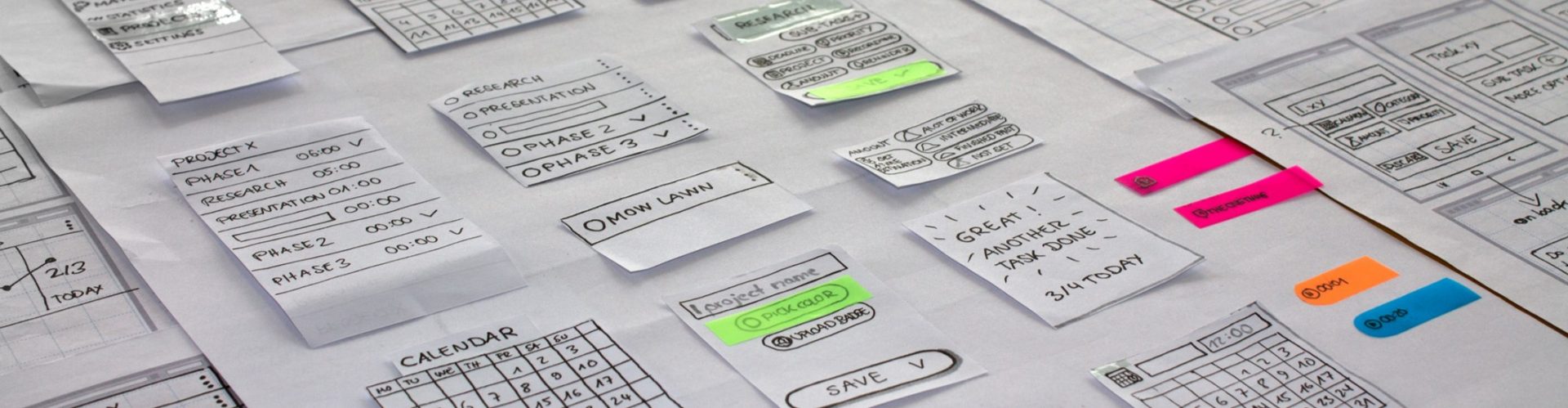
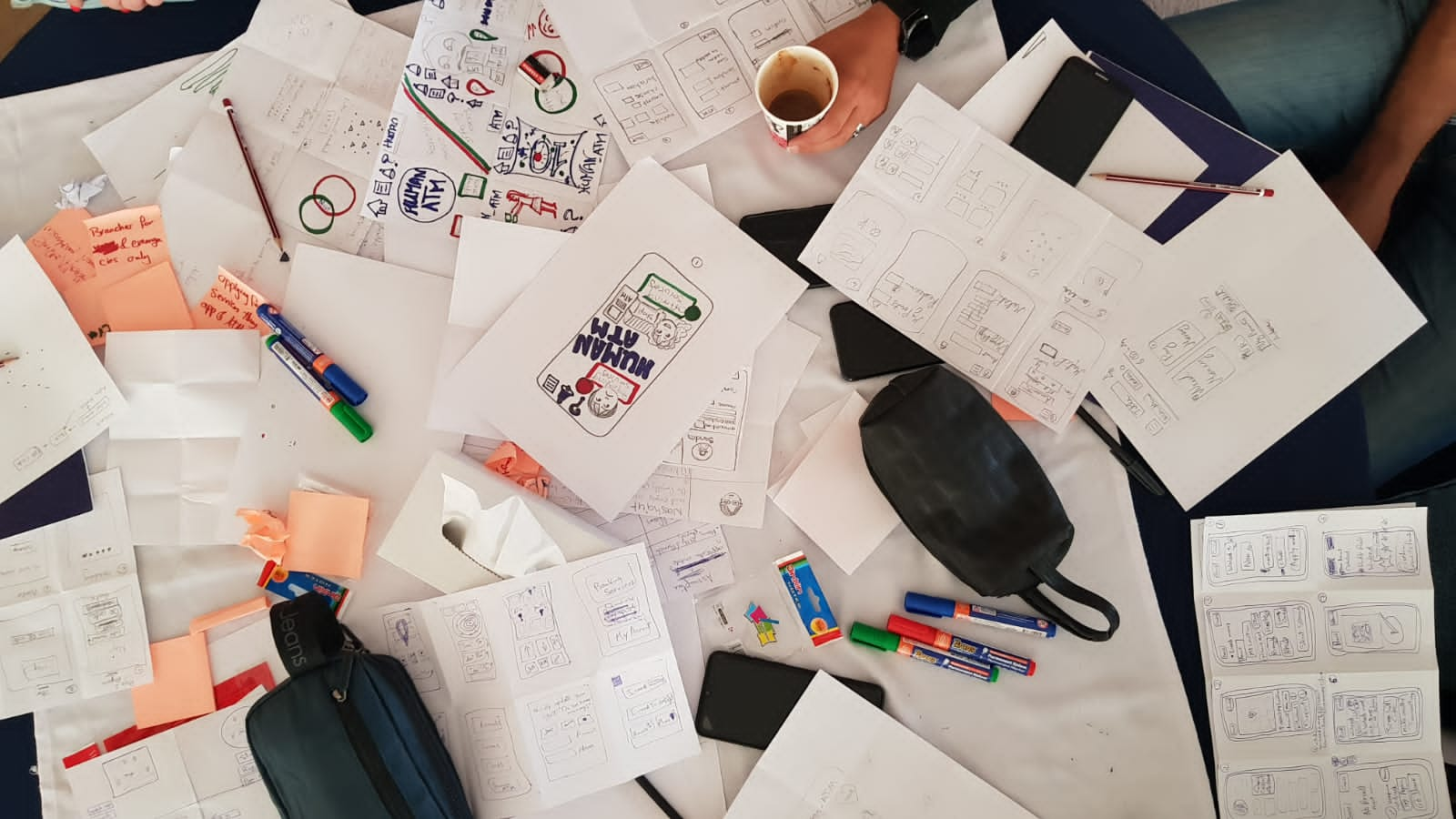
The antidote to these failures is a rigid adherence to evidence-based design. This is not about brainstorming in a room with sticky notes; it is about rigorous hypothesis testing.
Effective design methodology mirrors the scientific method. We begin with a hypothesis about user behavior and business value. We then design the smallest possible experiment often a low-fidelity prototype to test that hypothesis. We do not commit engineering resources until we have empirical proof that the solution works.
This process of „validation before build“ is the single most effective way to reduce technical debt. According to IBM, fixing a design error during the development phase costs 10 times more than fixing it during design. Fixing it after release costs 100 times more.
A mature UX company does not just design the solution; they design the research framework that validates the problem. Through dedicated UX Research & Lab services, organizations can simulate market responses before capital is deployed. This shifts the executive decision-making process from „I think“ to „The data shows.“
Proof & Outcomes: The Economics of Design
The correlation between design maturity and financial performance is no longer anecdotal. It is quantifiable and significant.
McKinsey & Company tracked the design practices of 300 publicly listed companies over a five-year period. They found that companies in the top quartile of the McKinsey Design Index (MDI) outperformed industry benchmarks by as much as two to one. Specifically, these design-led organizations achieved 32% higher revenue growth and 56% higher total returns to shareholders (TRS) compared to their peers.
Furthermore, Forrester Research has demonstrated that a well-conceived, frictionless user interface can raise conversion rates by up to 200%, and a better UX design could yield conversion rates up to 400%. The return on investment for UX is calculated at $100 for every $1 invested.
These numbers clarify the executive mandate: Design is a lever for valuation. When you select a UX company, you are selecting the caliber of that lever.
The MENA Perspective: A Different Digital Gravity
While the principles of good design are universal, the application within the Middle East and North Africa requires distinct strategic nuance. The MENA region is not merely a copy of Western markets; it is a unique ecosystem with its own digital gravity.
Mobile-First is an Understatement
In markets like Saudi Arabia and the UAE, smartphone penetration rates are among the highest in the world. Unlike Europe or the US, where many users transitioned from desktop to mobile, a vast segment of the MENA population is mobile-only. A UX company operating here must understand that the mobile experience is not a „lite“ version of the desktop product; it is the *only* product.
The Trust Deficit
E-commerce and digital banking adoption in MENA has historically hinged on trust. Cultural attitudes toward privacy and data security differ significantly from the West. Design in this region must work harder to establish credibility instantly. This involves more than just translation; it requires deep localization of imagery, tone, and user flow that resonates with local expectations.
The Super App Expectation
The dominance of „Super Apps“ (like Careem or Talabat) has conditioned MENA users to expect integrated ecosystems. They have little patience for fragmented, single-purpose applications that create friction. Webkeyz understands that to succeed here, digital products must offer seamless integration and immediate utility, mirroring the convenience users experience in the region’s dominant platforms.
This regional expertise is why a global agency often stumbles in Riyadh or Cairo. They bring Western assumptions to a market that operates on different social and digital norms.
Executive Takeaway
The decision to hire a UX company is a strategic fork in the road. Path one leads to a cosmetic refresh a temporary facelift that fails to address structural issues. Path two leads to business transformation, where design becomes a core competency that drives retention and revenue.
To take the second path, change how you vet your partners. Stop asking for portfolios of pretty screens. Start asking for case studies of problem-solving. Ask how they validate assumptions. Ask how they measure success.
Your goal is not to buy design hours. Your goal is to buy risk reduction and market acceleration. Monday morning, audit your current digital roadmap. If you cannot point to the user data that validates your next major feature release, pause the build. It is cheaper to validate now than to fail later.
We built Webkeyz to be the partner that prevents that failure.
Explore our work to see how we turn design into a competitive advantage.