



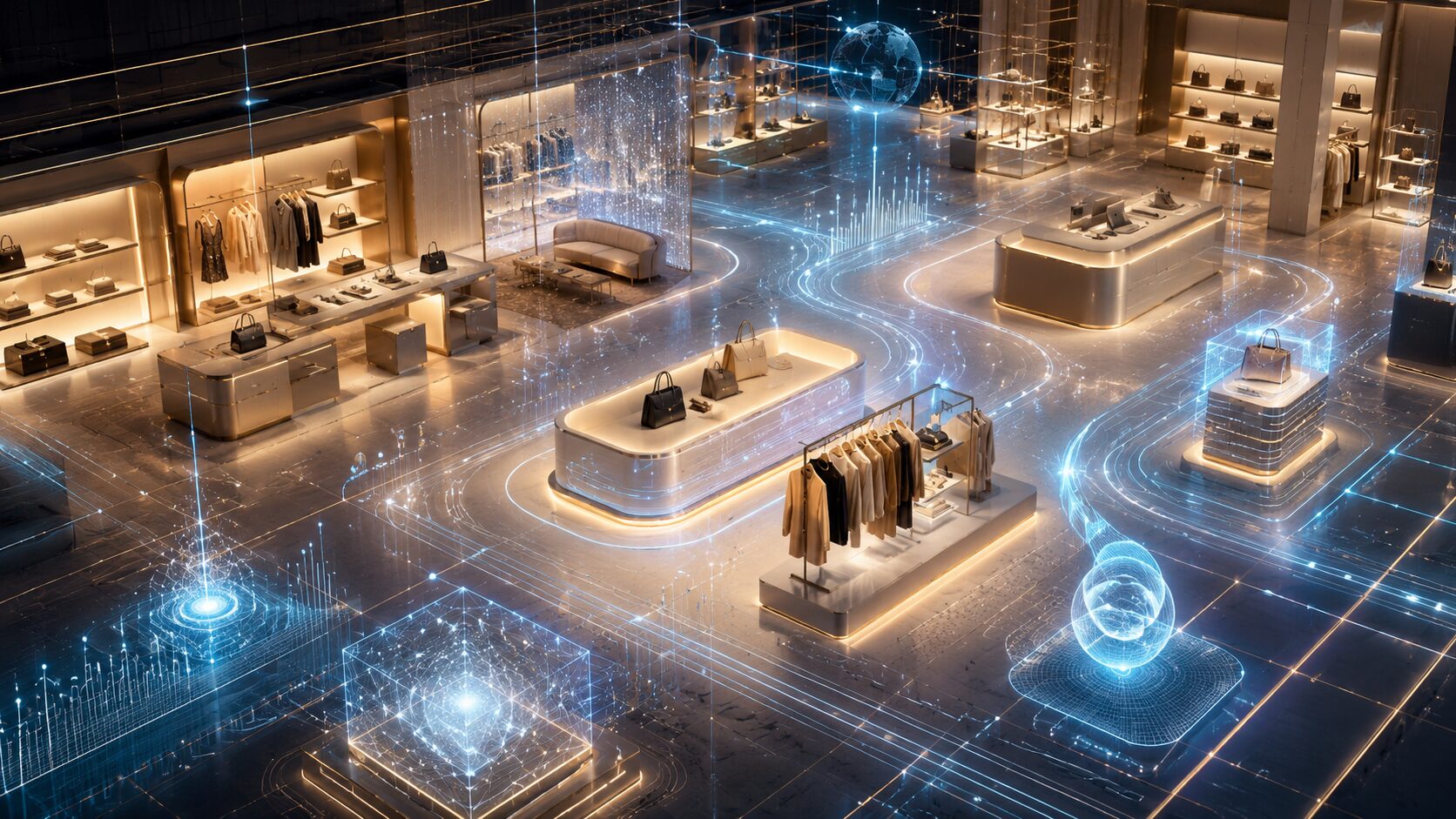
Physical retail is not dead, but the traditional concept of visual merchandising is financially obsolete. Executives who treat their brick-and-mortar locations as mere inventory warehouses are bleeding capital. Customers walk into your stores carrying supercomputers in their pockets. They possess instant access to global pricing, infinite product variations, and seamless digital checkout. If your physical footprint fails to match that digital speed, personalization, and convenience, those customers will walk out and purchase from a competitor before they even reach their cars.
The physical store represents a massive capital expenditure. Real estate, inventory holding costs, staffing, and utilities demand aggressive returns. To justify this overhead, a store must perform as a high-efficiency customer acquisition and retention engine. This requires a fundamental shift toward rigorous in-store experience design. This discipline goes far beyond arranging shelves or installing bright lighting. It requires seamlessly integrating digital elements into physical spaces, enhancing customer engagement, and mapping the entire journey from entry to checkout with the precision of a digital user interface.
In the MENA region, this urgency is amplified. Unlike the widely publicized retail apocalypse in the United States, MENA retail culture thrives on the physical mall as a primary social hub. The harsh climate and deep-rooted cultural emphasis on collective experiences drive massive foot traffic. Yet, this high footfall masks a dangerous conversion problem. Regional consumers are hyper-connected and heavily accustomed to the friction-free digital experiences provided by global e-commerce giants. When local retailers fail to bridge the gap between digital expectations and physical reality, they squander their most valuable geographic advantage.
We merge physical and digital realms to redefine the retail experience, creating spaces that not only sell but also tell a compelling brand story. The objective is clear: stop relying on accidental discovery and start engineering intentional engagement. By treating the physical store as a user interface, executives can deploy behavioral analytics, spatial planning, and digital touchpoints to capture attention, extend dwell time, and aggressively drive revenue.
Why Poor In-Store Experience Design Destroys Retail Margins
Retail margins are notoriously thin, and operational inefficiencies within a physical space rapidly compound into millions of dollars in lost revenue. When executives fail to prioritize in-store experience design, they inadvertently build friction into the buying process. Customers encounter disjointed physical layouts, disconnected digital touchpoints, and unhelpful analog signage that forces them to rely on scarce floor staff for basic information. This friction directly limits cart sizes and destroys the probability of repeat visits.
The financial damage extends beyond lost immediate sales. Poor physical retail execution severely undermines your digital investments. Retailers spend heavily on targeted digital advertising, sophisticated loyalty applications, and personalized e-commerce engines. However, if a customer receives a highly personalized digital offer but encounters a generic, uninspired physical store that fails to recognize that offer or facilitate a seamless checkout, the entire omnichannel strategy collapses. The brand loses the sale, and the capital spent on digital acquisition is entirely wasted.
Research continuously validates the financial necessity of bridging this gap. According to McKinsey, physical stores remain critical for brand discovery and omnichannel fulfillment, with successful retailers transforming their footprints to integrate digital capabilities and experiential elements that drive both footfall and cross-channel sales. Customers expect the physical store to serve as a tangible extension of their digital profile. When the store fails to recognize their previous interactions, preferences, or cart history, the brand actively damages consumer trust.
Furthermore, a lack of strategic in-store experience design leaves retailers blind to actionable operational data. E-commerce platforms generate continuous streams of data regarding drop-off points, dwell times, and interaction rates. Traditional physical stores operate in an information vacuum. Without integrated digital elements and smart spatial design, executives have no way of understanding why a specific aisle underperforms or why a particular promotional display fails to convert. You cannot optimize an environment you cannot measure. Designing stores that generate actionable behavioral data is a non-negotiable requirement for modern retail leadership.
The Silos Disrupting Effective In-Store Experience Design
The primary barrier to executing seamless physical retail is rarely a lack of technology. The failure is almost entirely organizational. In most large retail enterprises, digital operations and physical store operations are divided into aggressive, competing silos. E-commerce teams manage the digital application, while regional managers oversee physical visual merchandising. These departments operate on separate profit and loss statements, pursue distinct key performance indicators, and view attribution as a zero-sum game.
This structural disconnect makes cohesive in-store experience design impossible. When digital and physical teams refuse to share data or align their customer journeys, the resulting store environment is chaotic. E-commerce teams may push a massive promotion on the mobile app, but the physical store teams lack the spatial layout or digital signage to support the influx of targeted traffic. Conversely, store teams might redesign a physical floor plan without consulting the digital product owners, rendering in-store mapping features instantly useless.
How Broken Omnichannel Alignment Ruins In-Store Experience Design
This organizational dysfunction directly impacts the consumer. Consider the friction of a customer attempting a buy-online-pickup-in-store transaction. The digital experience might be flawless, allowing the customer to quickly secure an item. However, if the physical space lacks clear wayfinding, dedicated pickup zones, and rapid digital authentication, the customer is forced to wait in a traditional checkout line. The digital convenience is immediately nullified by physical incompetence.
Executives must understand that consumers do not perceive channels; they perceive the brand. They expect their digital history to inform their physical interactions. If a customer has saved a specific size and style profile in your mobile application, they expect your in-store digital kiosks or equipped floor staff to access that data instantly. When retail silos prevent this data exchange, the in-store experience design feels shallow, generic, and frustrating. Fixing this requires executive mandates to tear down departmental walls and unify the customer experience under a single, cohesive strategy.
A Data-Driven Framework for Superior In-Store Experience Design
To transform retail spaces from passive showrooms into active revenue engines, leadership must abandon intuition-based merchandising. Instead, you must adopt a holistic, data-driven methodology that applies rigorous user experience principles to the built environment. As MENA’s first UX Design and Innovation Agency, webkeyz employs a strategic mix of UX/UI design principles and advanced spatial planning to engineer retail spaces that draw customers in, encourage them to explore, and compel them to return.
We dive deep into understanding your brand and your customers, mapping every granular detail of the in-store journey from entry to checkout. This approach eliminates the guesswork from physical retail. We analyze how users navigate your digital properties and translate those behavioral patterns into physical layouts. If your digital data indicates that customers frequently bundle two specific categories of products, our spatial planning ensures those categories are physically adjacent or connected via intuitive digital prompts on the floor.
Executives looking to overhaul their physical footprint should explore comprehensive Spatial Experience Design strategies. This service aligns the architectural flow of your store with the psychological needs of your target demographic. We optimize traffic patterns, eliminate cognitive bottlenecks, and ensure that high-margin products are placed precisely where customer attention naturally settles. Our designs are data-driven, informed by real user feedback and behavioral analytics, ensuring that every square foot of your real estate actively contributes to your commercial objectives.
Integrating Digital Touchpoints into In-Store Experience Design
Creating a cohesive shopping experience requires seamlessly integrating digital elements into physical spaces without causing technological fatigue. Screens and kiosks should never be installed merely for aesthetic modernization. Every digital touchpoint must serve a specific functional purpose: reducing wait times, providing deeper product information, or facilitating localized inventory checks. We bridge the gap between online and offline worlds by designing interactive elements that recognize the user, sync with their mobile devices, and personalize the physical interaction.
This integration extends to the tools provided to your frontline staff. True in-store experience design empowers retail employees with robust digital interfaces that provide instant access to customer profiles, purchase histories, and real-time inventory levels across the network. When your staff holds the digital capability to seamlessly order an out-of-stock item to a customer’s home directly from the shop floor, you eliminate the primary cause of physical retail abandonment. You transform the physical space into an interactive, high-conversion node within your broader digital ecosystem.
Executing Sensory and Spatial In-Store Experience Design
Visual layouts and digital screens represent only a fraction of the total physical experience. Our expertise in sensory design means that we consider how to engage the other senses, creating a truly immersive shopping environment. Lighting temperatures, acoustic treatments, and even ambient scent profiles drastically alter human behavior within a confined space. High cognitive load drives customers out of stores faster; precise sensory engineering lowers that load, significantly increasing dwell times.
We meticulously calibrate these environmental factors to match the desired brand narrative and intended customer pacing. A fast-casual retail environment requires bright, clear lighting and energetic acoustics to encourage rapid turnover and high transaction volumes. A luxury retail environment demands sound-dampening materials, localized warm lighting, and private digital consultation zones that slow the customer down and encourage deep engagement with high-ticket items. By mastering the execution of sensory and spatial elements, we ensure your physical store forcefully supports your overarching business strategy.
How Strategic In-Store Experience Design Accelerates Revenue
The ultimate measure of any design initiative is its impact on the bottom line. Transforming brick-and-mortar stores into immersive, engaging environments directly correlates with measurable financial outcomes. By choosing webkeyz to lead your physical retail transformation, retailers can expect to see an immediate shift in how their locations perform. We engineer spaces that systematically dismantle buying objections, resulting in enhanced customer engagement, vastly increased dwell times, and significantly higher sales.
Extended dwell time is a critical metric in physical retail. When customers spend more time exploring a well-designed, frictionless environment, average transaction values increase exponentially. By utilizing intelligent wayfinding and strategic product grouping, we guide shoppers through high-margin discovery zones before they reach the checkout. Furthermore, by integrating self-service digital touchpoints, we reduce the operational bottleneck of traditional cash wraps, ensuring that long lines never deter a motivated buyer.
Industry data confirms the financial power of executing this integration correctly. According to Deloitte, physical stores must evolve into brand experience centers, as integrating digital convenience with physical engagement directly drives both immediate profitability and long-term brand loyalty. Retailers who successfully fuse these domains capture a disproportionate share of the market, effectively starving their less innovative competitors of foot traffic.
We deliver these exact competitive advantages through our targeted In-Store Experience Design service. We do not just build beautiful stores; we build high-performance commercial interfaces. By tracking post-launch metrics such as footfall conversion rates, digital kiosk interaction frequencies, and cross-channel purchasing behavior, we prove the financial viability of our designs. This comprehensive approach ensures that every dollar spent on store renovation delivers a calculable, accelerating return on investment.
Mandating In-Store Experience Design Excellence Across Your Portfolio
Operationalizing this level of physical retail excellence requires decisive executive action. You cannot delegate the integration of digital and physical realms to mid-level management and expect transformational results. The C-suite must take active ownership of the in-store experience design strategy. This begins with restructuring internal key performance indicators to eliminate the toxic competition between e-commerce and physical operations. You must evaluate regional managers and digital product owners on the total health of the omnichannel ecosystem, forcing them to collaborate on unified customer journeys.
Leadership must also demand rigorous user testing for physical spaces, identical to the protocols used for digital product launches. Before rolling out a new floor plan or installing experimental digital touchpoints across a hundred locations, you must build prototypes, observe real customer interactions, and refine the design based on concrete behavioral data. Stop allowing intuition and legacy merchandising habits to dictate how your most expensive assets are utilized. Mandate that every square foot of your retail portfolio justifies its existence through measurable engagement and clear revenue attribution.
In a retail market defined by infinite consumer choice and aggressive digital disruption, the physical store is your most potent differentiator. It is the only place where you completely control the sensory, spatial, and digital environment of your customer. Do not waste that advantage on mediocre execution. Take the necessary steps to engineer retail spaces that command attention, strip away friction, and dominate your category.
Ready to engineer retail spaces that actively drive omnichannel revenue? Connect with our design leadership to discuss how we can transform your physical footprint.