



The most significant challenges organizations face today are not purely technical or operational, they are experiential and strategic. How do you build products that users genuinely adopt? How do you differentiate in a market where features can be copied and price can always be undercut? How do you translate a strategic ambition into a product that the market actually wants?
These are the questions that Design and Innovation Agency: exist to answer. Unlike traditional creative agencies focused on brand expression, or technology partners focused on software delivery, design and innovation agencies bring together research, design thinking, strategic consulting, and technical capability to help organizations solve complex problems and build products that change markets.
This guide explains what dDesign and Innovation Agency, how they differ from other agency types, what to look for when evaluating partners, and how to structure an engagement that produces transformative outcomes.
What Is a Design and Innovation Agency?
A design and innovation agency is a professional services firm that combines human-centered design methodology with a focus on business innovation. At the core of their practice is the belief that the best products and services emerge from a deep understanding of human needs, not from technological capability alone or market analysis in isolation.
Design and innovation agencies typically work across the full arc of product development from early-stage problem definition and user research through concept development, prototyping, testing, and launch support. Some also provide strategic consulting services that connect product design to business model design and organizational change.
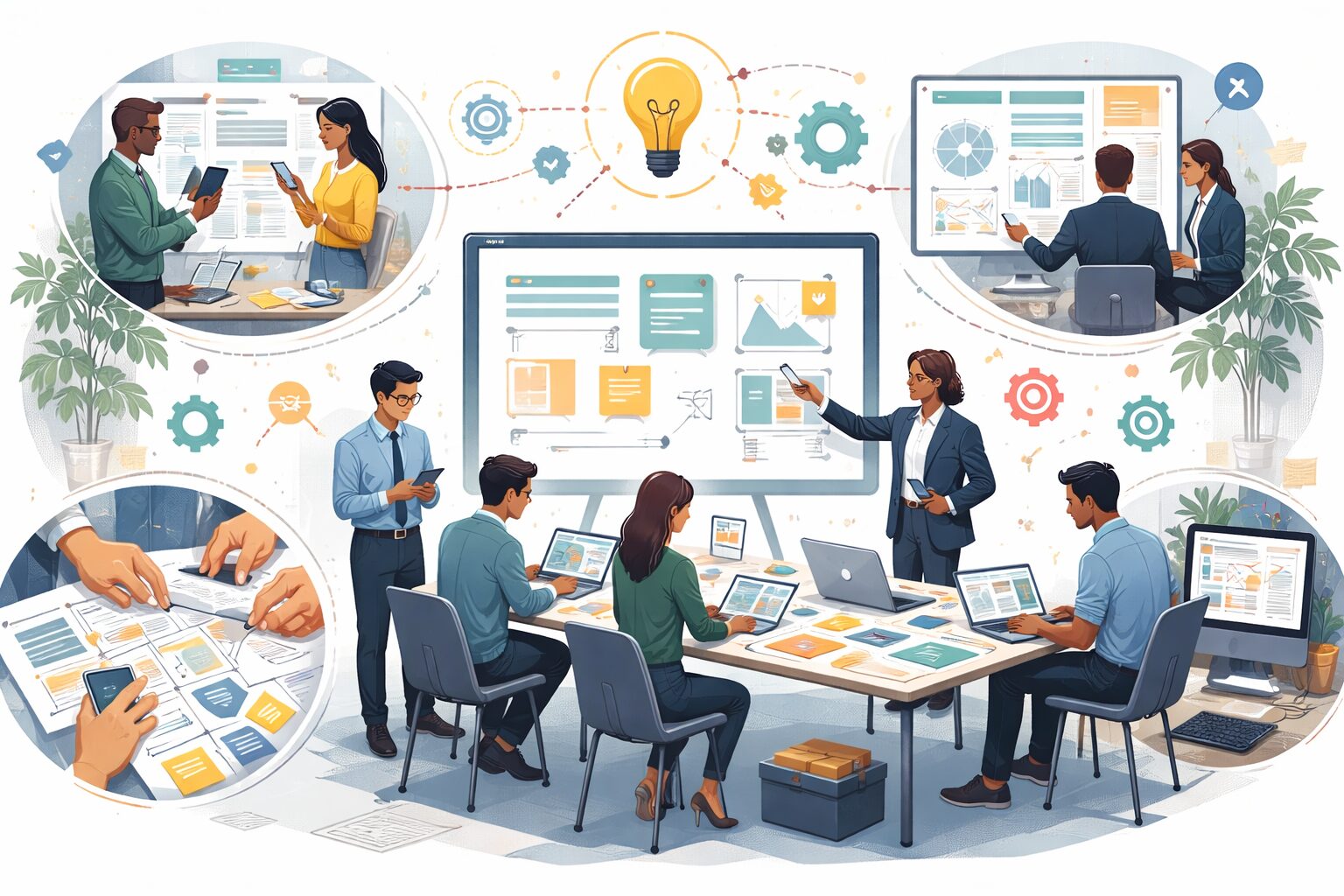
What distinguishes a design and innovation agency from a traditional UX agency or a management consultancy is the integration of disciplines. Design and innovation agencies bring researchers, designers, strategists, technologists, and business analysts together in pursuit of solutions that are simultaneously desirable (users want them), viable (the business can sustain them), and feasible (they can actually be built).
This tripartite framework, most famously articulated by IDEO is the conceptual foundation of design and innovation practice. It explains why these agencies approach problems differently from either pure design firms or pure strategy consultancies.
Core Services of a Design and Innovation Agency
The service portfolio of a design and innovation agency reflects the breadth of their methodology:
Research and Discovery
The foundation of all design and innovation work is a rigorous understanding of users, the market, and the organization. Research and discovery services include:
Ethnographic Research: Immersive observation of users in their real environments, revealing needs and behaviors that no survey or interview could surface. Ethnographic research is the gold standard for understanding the full context in which a product will be used.
User Interviews and Synthesis: In-depth conversations with users, customers, and stakeholders, synthesized through structured analysis into actionable insights, personas, and journey maps.
Competitive and Market Analysis: Understanding the landscape in which the product will compete including where competitors succeed, where they fail, and where opportunities exist that no current player is addressing effectively.
Expert Stakeholder Interviews: Many design and innovation challenges involve understanding the organization as much as the user. Interviews with internal stakeholders, product owners, engineers, salespeople, customer service teams, surface the organizational context and constraints that any solution must navigate.
Jobs-to-be-Done Research: A specialized methodology that reveals the fundamental outcomes users are trying to achieve beyond the surface-level features they request. JTBD research produces insights that inform product positioning and differentiation strategy as much as product design.
Strategic Design and Problem Definition
Before solutions are designed, the problem must be defined precisely. Design and innovation agencies invest significant resources in this phase:
Problem Framing: Translating ambiguous organizational challenges into precise, actionable design briefs. The quality of the problem statement determines the quality of the solutions that follow—and getting this right is considerably harder than it appears.
Vision and Principles Development: Articulating a product vision and set of design principles that will guide decision-making throughout development and beyond. A clear vision enables teams to move faster and with greater coherence, even when detailed specifications are incomplete.
Opportunity Mapping: Identifying the specific areas within a problem space where design intervention will have the greatest impact on user experience and business outcomes.
Strategic Road mapping: Connecting design and innovation work to the long-term strategic roadmap of the organization ensuring that product investments are sequenced in a way that builds sustainable competitive advantage.
Ideation and Concept Development
With a clear problem definition, design and innovation agencies lead structured ideation processes:
Design Sprints: Compressed, time-boxed design processes typically five days that move from problem definition to tested prototype. Design sprints are valuable when organizations need to validate a concept quickly before committing significant development resources.
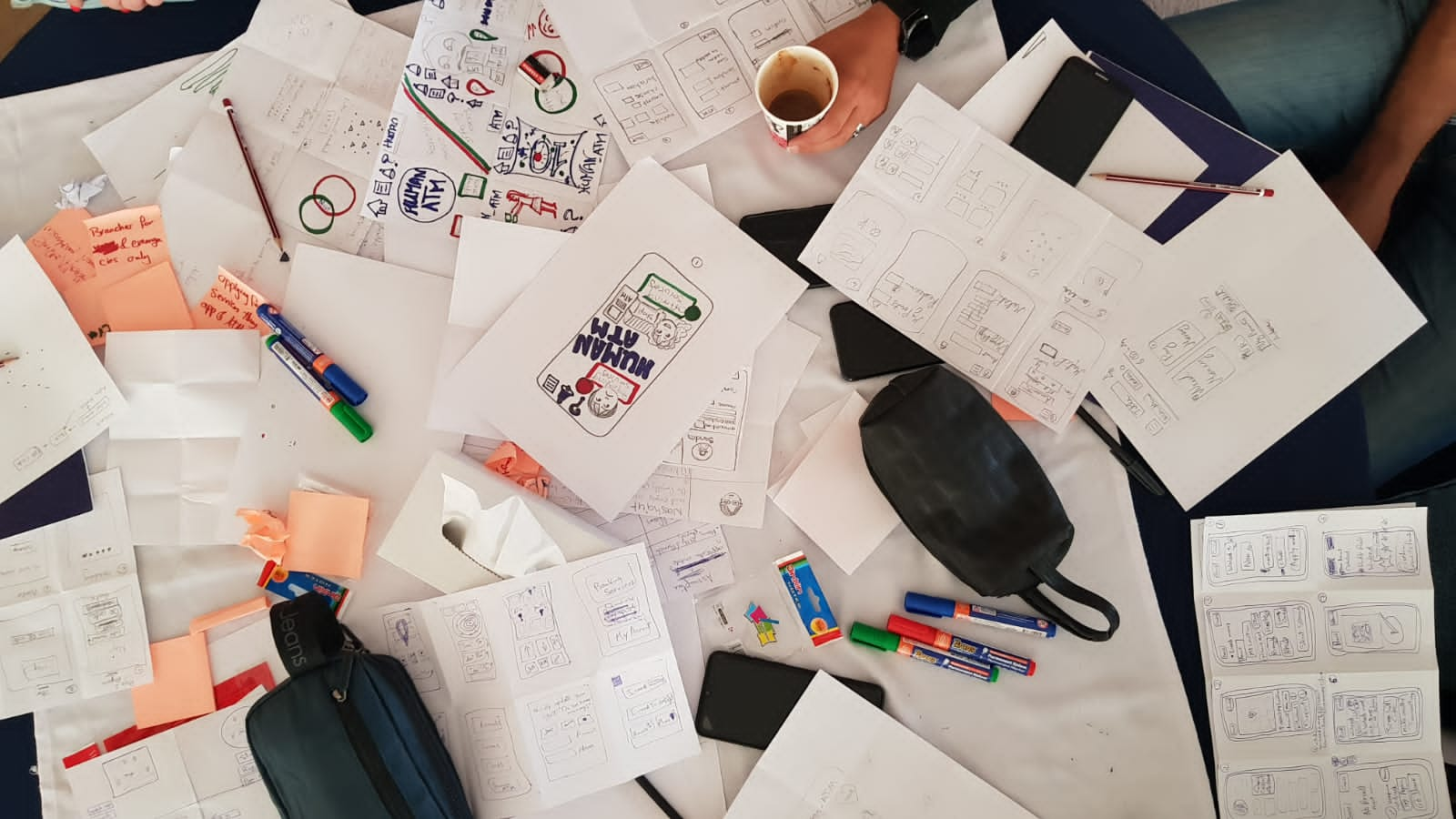
Creative Workshops: Facilitated sessions that bring together diverse stakeholders, designers, engineers, business leaders, and in some cases users to generate and evaluate a wide range of potential solutions. Structured workshop facilitation is a specialized skill that design and innovation agencies develop with considerable investment.
Concept Development: Taking the most promising ideas from ideation and developing them into sufficiently articulated concepts that can be evaluated, refined, and tested. This involves both visual design work and strategic articulation of the value proposition and use case.
Prototyping and Testing
Design and innovation agencies validate concepts through rapid prototyping and testing before significant development investment is made:
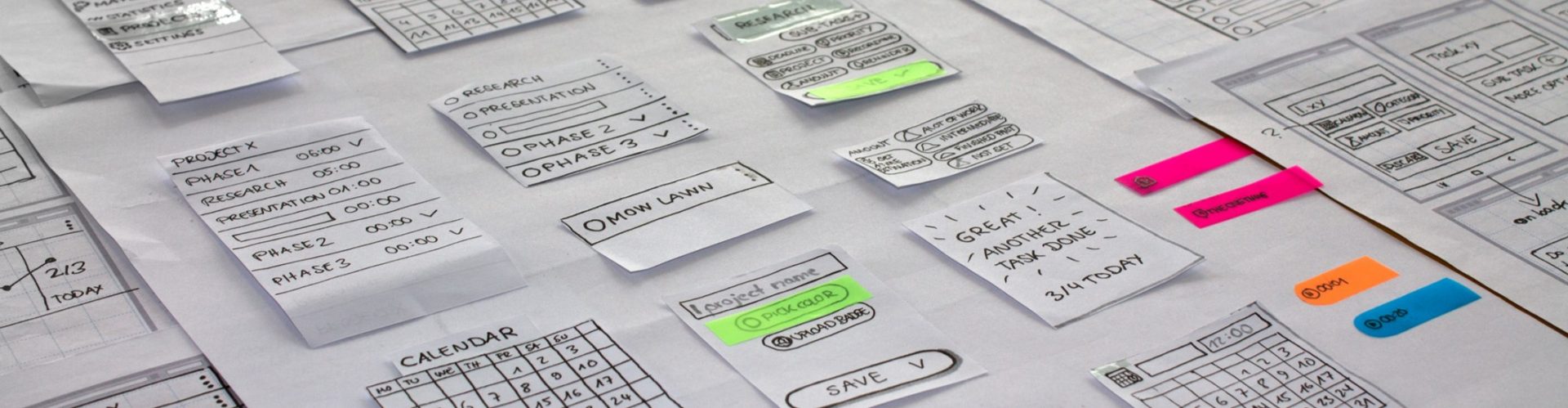
Low-Fidelity Prototyping: Paper prototypes, sketches, and basic interactive mockups that can be created and tested in hours. The speed of low-fidelity prototyping enables many ideas to be evaluated quickly, ensuring that only the strongest concepts advance.
High-Fidelity Prototyping: Detailed, interactive prototypes that replicate the intended user experience with sufficient realism to generate meaningful usability data. High-fidelity prototypes are used when the concept is more defined and the questions being tested require a realistic simulation.
User Testing: Evaluating prototypes with real users to identify problems, validate assumptions, and generate insights that drive iteration. The best design and innovation agencies test continuously throughout the development process, not just at a final validation stage.
Concept Validation Research: Assessing how potential users respond to new concepts do they understand the value proposition? Would they use it? What would make it more compelling? This research reduces market risk and informs the go-to-market strategy alongside the product design.
Product Design and Development
Many design and innovation agencies extend their practice into full product design and development:
UX and Visual Design: Designing the complete user experience and visual interface of a product, from information architecture through interaction design and final visual design.
Design Systems: Building the component libraries and design guidelines that enable consistent, scalable product design across an organization.
Technical Development: Some agencies provide or partner closely with development teams to carry a product from design through to working software. This integration reduces the handoff friction that often compromises design intent during implementation.
How Design and Innovation Agencies Differ from Other Agency Types
Understanding where design and innovation agencies fit in the broader landscape of professional services firms helps organizations select the right type of partner for their specific needs:
vs. Traditional Creative Agencies: Traditional agencies (advertising, brand, marketing) focus primarily on communication and brand expression. Design and innovation agencies focus on product and service design the functional and experiential dimensions of what an organization delivers. For building new digital products, design and innovation agencies are the appropriate partner; for brand campaigns and marketing communications, a traditional creative agency may be more suitable.
vs. Management Consultancies: Strategy consultancies analyze markets, assess organizational capabilities, and recommend strategic directions. Design and innovation agencies take the next step: they translate strategic directions into designed solutions, validated with users, that organizations can actually build. The two types are often complementary rather than competitive strategy consulting defines the direction, design and innovation provides the road.
vs. Technology Partners: Software development agencies and IT service companies focus on technical implementation. They build what is specified. Design and innovation agencies focus on defining what should be built and why, before implementation begins. Organizations that engage technology partners without design and innovation work often build technically capable products that users do not adopt.
What to Look for When Choosing a Design and Innovation Agency
The quality and approach of design and innovation agencies varies significantly. Here is how to evaluate potential partners rigorously:
Genuine Research Commitment
The most important differentiator between a genuine design and innovation agency and a creative agency that has adopted the language of innovation is the seriousness and sophistication of their research practice. Ask specifically how they conduct user research, what methods they use, how they synthesize findings into insights, and how those insights connect to design decisions. Review sample research deliverables.
Portfolio of Validated Outcomes
A design and innovation agency’s portfolio should demonstrate not just the quality of their design work but the outcomes that work produced. Look for case studies that connect design interventions to measurable business results conversion rate improvements, user adoption metrics, NPS improvements, revenue impact. Agencies that can tell this story credibly are the ones whose work actually moves the needle.
Cross-Disciplinary Team Composition
Design and innovation requires perspectives from multiple disciplines. Evaluate whether a potential agency’s team genuinely integrates research, design, strategy, and technology or whether they are primarily designers who have added “innovation” to their positioning. Ask about the backgrounds of the people who will work on your project.
Strategic Partnership Orientation
The best design and innovation engagements are collaborative—the agency brings expertise and methodology, but the client brings domain knowledge, organizational context, and strategic authority. Evaluate whether potential partners approach the relationship as a genuine strategic collaboration or as a vendor-client transaction. The former produces transformative work; the latter produces deliverables.
References from Comparable Engagements
Ask for references from clients with similar organizational profiles and challenges to yours. Contact those references and ask specific questions: Did the agency produce insights that genuinely surprised you? Did their designs hold up in development? Did they help you navigate organizational resistance to change? Would you engage them again?
Building a Successful Partnership with a Design and Innovation Agency
The structure of the engagement shapes the quality of the outcome. Here are principles for making design and innovation agency partnerships work:
Commit to the Research: Organizations that push agencies to skip or abbreviate the research phase to save time or money consistently produce worse outcomes. Research is not overhead it is the input that determines whether everything downstream is building the right thing.
Involve Senior Decision-Makers in the Process: Design and innovation work produces value only if it influences decisions. Ensuring that the people who own those decisions are engaged in the process observing research, participating in workshops, reviewing designs dramatically increases the probability of adoption.
Embrace Iteration: Design and innovation is not a linear process that produces a perfect answer at the end. It is an iterative process that produces progressively better answers through repeated cycles of design, test, and refine. Organizations that expect a finished product from the first design sprint will be disappointed; those that commit to iteration will be surprised by how quickly the work improves.
Plan for Implementation: The most transformative design and innovation work means nothing if it is not implemented. Ensure that your engagement plan includes a clear path from final design deliverables to implemented product—including the resourcing, organizational buy-in, and development partnerships needed to bring the work to life.
Conclusion: Design and Innovation as a Competitive Advantage
In a market where every organization has access to roughly the same technology and the same talent pools, the organizations that win are those that translate their understanding of human needs into products and services that users genuinely choose. Design and innovation agencies exist to build this capability combining the empathy of user-centered research, the creativity of design practice, the rigor of strategic analysis, and the practicality of real-world implementation.
Choosing the right design and innovation partner is one of the highest-leverage decisions a business can make. The right partner will not just deliver better designs they will help your organization see its challenges differently, build its capacity for ongoing innovation, and create products that define category leadership rather than just competing within it.
https://www.mckinsey.com/capabilities/tech-and-ai/our-insights/the-business-value-of-design
Until next time explore webkeyz’s case studies
and Keep Thinking!