



Most organizations do not suffer from a lack of ideas. Walk into any boardroom in Riyadh, Dubai, or Cairo, and you will find whiteboards covered in sticky notes and roadmaps filled with ambitious features. The ambition is there. The capital is there. Yet, the disconnect between strategic intent and market reality remains the primary destroyer of value in the digital economy.
This is the “Innovation Gap.” It is the graveyard where good strategies go to die because execution failed to match the speed of the market. For C-suite leaders, closing this gap is not a design challenge; it is a fundamental business imperative. This is where the specific utility of a product innovation agency comes into play. It is not about outsourcing creativity. It is about bringing in a specialized engine designed to validate, prototype, and ship products faster than an internal team can navigate its own bureaucracy, which is exactly where a product innovation agency creates value.
At Webkeyz, we have observed a consistent pattern across the MENA region. Companies attempt to innovate by hiring more developers or purchasing expensive SaaS tools, mistaking operational capacity for innovation capability. True product innovation requires a rigorous methodology that de-risks investment before code is written, and a product innovation agency is often best equipped to apply that methodology. It requires an external force capable of challenging assumptions that internal teams accept as fact.
Why Internal Teams Struggle Without a Product Innovation Agency
The modern corporation is built for efficiency, not discovery. Your organization is likely optimized to protect its core revenue streams, standardize processes, and minimize variance. These are virtues for operating an existing business model, but they are toxins for creating a new one.
When you ask an internal team to disrupt the core product, you are asking the corporate immune system to attack itself. Internal teams are incentivized to keep the lights on and avoid failure. Innovation, by definition, requires failure—or at least the rapid testing of hypotheses that might turn out to be wrong.
A product innovation agency operates outside this immune system. We do not have to worry about political capital or departmental silos. Our mandate is singular: identify value, validate it with users, and build the path to revenue. This autonomy allows an agency to move with a velocity that internal teams effectively cannot match, regardless of their talent level.
Why Companies Turn to a Product Innovation Agency
If efficiency is the structural barrier, the behavioral barriers are even more insidious. We see three specific “hidden killers” that stall internal product development, necessitating an external partner.
1. The Confirmation Bias Trap
Internal teams often fall in love with the solution before they understand the problem. They build what the CEO requested rather than what the market demands. Without unbiased validation, millions are spent developing features that users ignore. An external agency brings the cold objectivity required to kill bad ideas early.
2. Operational Blindness
You cannot read the label when you are inside the jar. Internal teams are often too close to the product to see its friction points. They utilize internal acronyms, assume user knowledge that does not exist, and accept clunky workflows because “that’s how the backend works.”
3. The Talent mismatch
Maintaining a legacy system requires a different skillset than building a zero-to-one product. You would not ask a marathon runner to win a sprint, yet executives frequently ask maintenance teams to deliver breakthrough innovation. Partnering with a product innovation agency allows you to lease a high-performance sprint team without the overhead of restructuring your entire IT department.
The Methodology: De-risking the Future
Innovation is often mischaracterized as a chaotic, creative process. In reality, successful innovation is boringly disciplined. It is a sequence of steps designed to reduce risk. When we engage with clients to build innovation programs, we do not start with pixels. We start with evidence.
Discovery and Validation
Before a single line of code is written, the market assumption must be stress-tested. This involves rigorous user research—not just surveys, but behavioral observation. We identify the “unmet need.” If the problem isn’t painful enough for the user to pay for a solution, no amount of design will save the product.
Rapid Prototyping
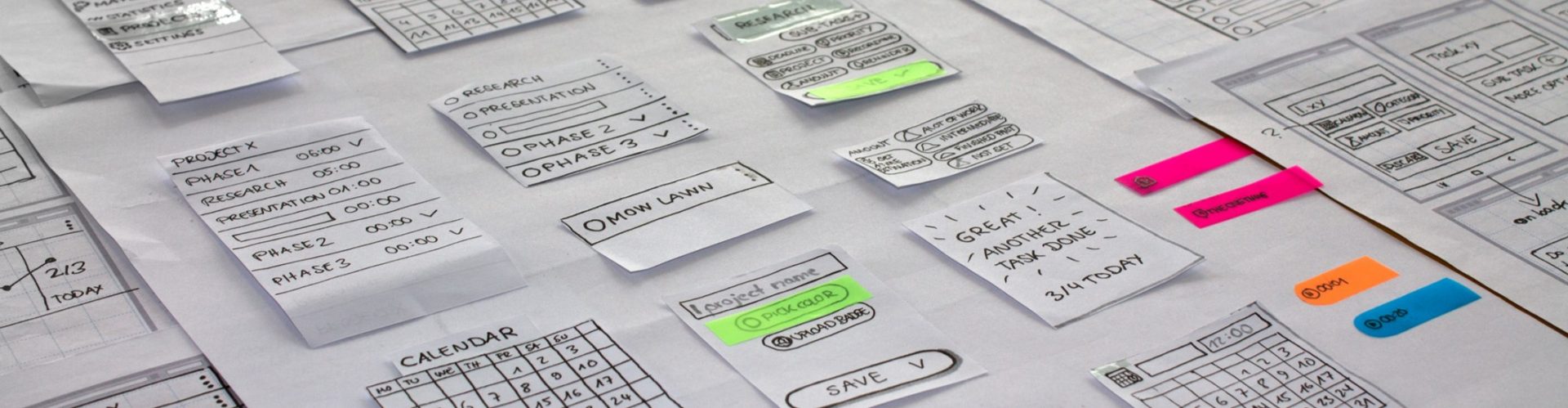
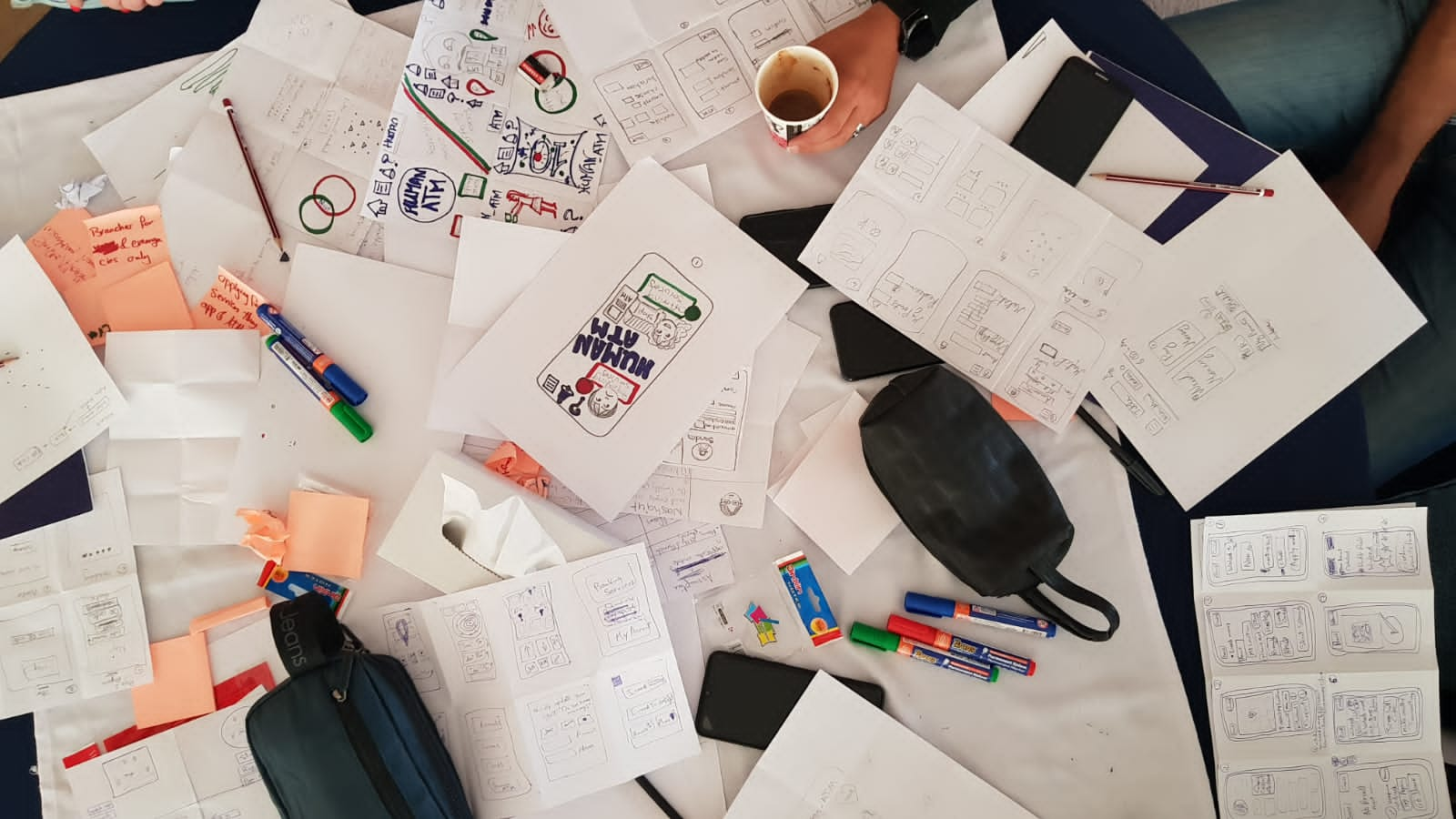
The most expensive way to test a hypothesis is engineering. The cheapest way is prototyping. A competent product innovation agency uses low-fidelity and high-fidelity prototypes to simulate the product experience. We put these in front of real users to gauge reaction. We iterate in days, not months. This phase is where the cost curve is bent downward; fixing a logic error in a prototype costs $1. Fixing it in production costs $10,000.
The Build-Measure-Learn Loop
Once the product enters development, the agency’s role shifts to maintaining fidelity to the user vision while managing technical constraints. The goal is the Minimum Viable Product (MVP)—not “minimum” in quality, but minimum in scope to deliver maximum learning. We ship, we measure data, and we iterate. This cycle creates a product that evolves with the market, rather than a static asset that is obsolete upon launch.
Proof & Outcomes: The Business Case for Design
The skepticism regarding design investment usually evaporates when confronted with the data. The correlation between robust design methodologies and financial performance is no longer anecdotal; it is quantified.
According to a comprehensive study by McKinsey, companies that excel in design grow revenues and shareholder returns at nearly twice the rate of their industry peers. This isn’t about aesthetics; it’s about the rigorous application of user-centric strategies.
Furthermore, Forrester research indicates that a well-conceived user interface can raise your website’s conversion rate by up to 200%, and a better UX design can yield conversion rates up to 400%. The return on investment for UX is substantial, with every dollar invested bringing $100 in return.
Conversely, the cost of bad design is immediate. PwC reports that 32% of all customers would stop doing business with a brand they loved after just one bad experience. In the digital realm, loyalty is fragile. A product innovation agency functions as your insurance policy against that churn.
The MENA Perspective: Why “Global Best Practice” Fails Here
As the first UX Design and Innovation Agency in MENA, Webkeyz has frequently been called in to fix products that were built using generic “Silicon Valley” templates. The MENA market is not a monolith, and it certainly is not a copy of the US or EU markets.
Consumer behavior in Saudi Arabia differs vastly from user expectations in Egypt or the UAE. Trust signals, payment preferences, navigation patterns, and even color psychology vary across borders. A global consultancy might deploy a standard e-commerce flow that works in London but fails in Riyadh because it ignores the nuances of local address systems or family-centric purchasing behaviors.
For example, when we conduct UX Research & Lab studies in the region, we find that MENA users have a lower tolerance for ambiguity in digital interfaces than their Western counterparts. They require higher explicit confirmation and clearer trust markers. A product innovation agency with deep regional roots understands that localization is not just translation—it is cultural adaptation.
We also operate in a region where government-led digitization (such as Vision 2030 in KSA) is setting a blistering pace. The private sector is playing catch-up. The window to capture market share is smaller here because the adoption curve is steeper. An agency that understands the regulatory and cultural landscape of MENA can navigate these complexities faster than an outsider.
Executive Takeaway
The decision to hire a product innovation agency is a capital allocation decision. You are allocating capital to speed and certainty.
If your internal teams are bogged down in legacy maintenance, or if your last three product launches failed to move the needle on revenue, the definition of insanity is to continue using the same process. You do not need more developers; you need a different approach to product definition and delivery.
Monday morning, look at your product roadmap. Ask your team two questions:
1. “What evidence do we have that customers will pay for this feature?”
2. “How quickly can we put a working version in their hands to verify that evidence?”
If the answer to the first is “we think so” and the answer to the second is “six months,” you have a problem that internal resources are unlikely to solve.
Innovation requires momentum, and the right product innovation agency can help create it. If you are ready to stop debating features and start validating revenue streams, let’s discuss how we can accelerate your roadmap. Start the conversation here.