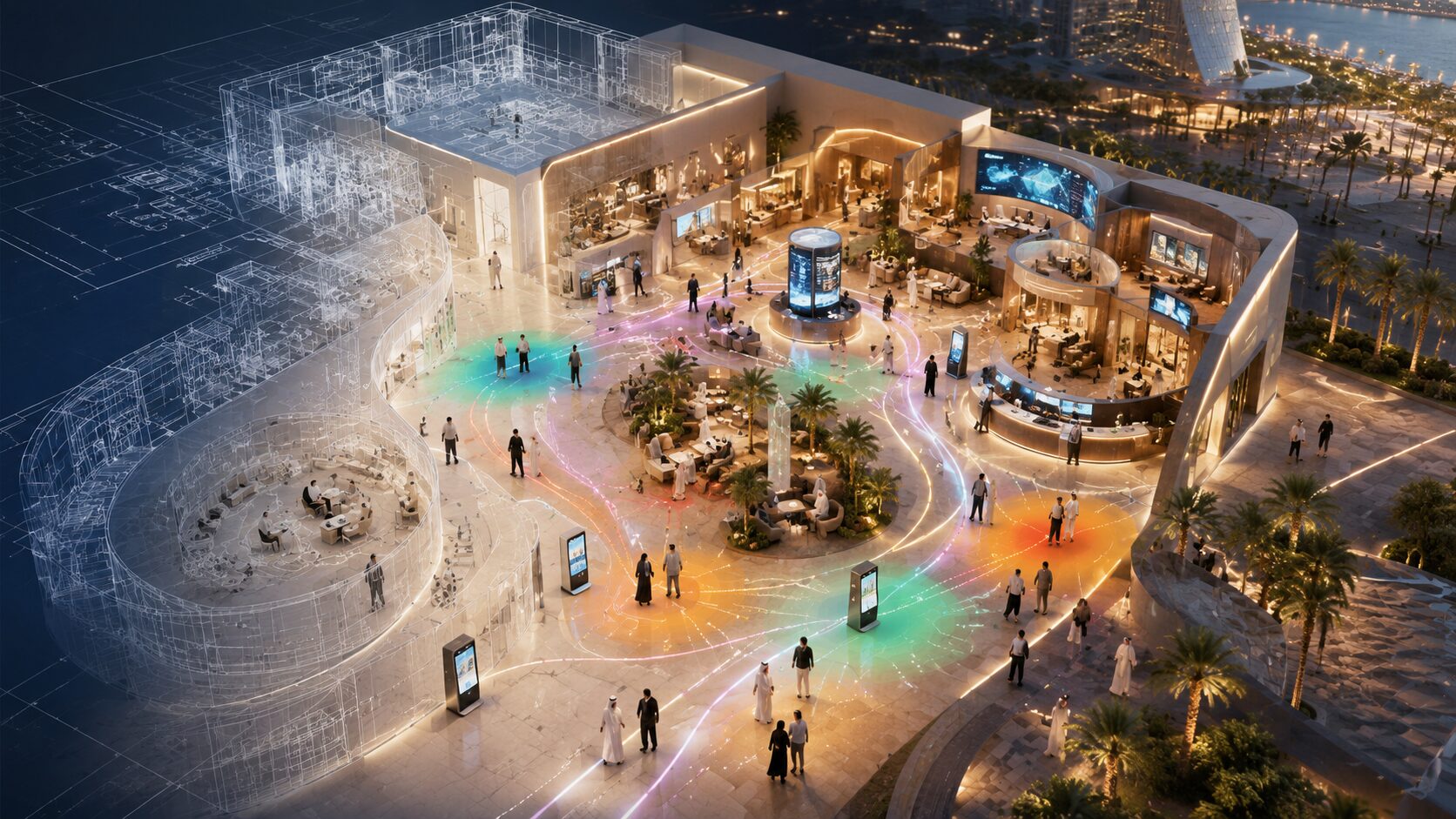




Digital transformation initiatives routinely fail because executives fund technology stacks instead of human adoption. You cannot code your way out of a poor user interface, and you cannot mandate customer loyalty through sheer marketing spend. Adoption is a direct byproduct of human-computer interaction. When enterprise leaders treat design as a downstream aesthetic activity rather than an upstream strategic business function, they guarantee structural friction across their digital ecosystems. This fundamental misunderstanding is why the selection of strategic ux design companies has evolved from a tactical procurement task into a critical board-level imperative.
In the MENA region, the cost of digital friction is exceptionally high. Hyper-growth markets, rapid digitization of public sectors, and uniquely aggressive mobile usage behaviors demand precision. Western interface templates do not seamlessly translate to Middle Eastern markets without severe degradation in usability and trust. As MENA’s first UX Design and Innovation Agency, webkeyz recognizes that successful digital execution requires far more than surface-level localization. It requires engineering an immersive experience that inherently drives adoption, commands user retention, and accelerates operational productivity.
Choosing the right partner means understanding the mechanics of digital value creation. To maximize return on investment, organizations must build power-packed, scalable systems from the ground up. True UX design aspects cover each element that offers this experience, prioritizing user feelings and the absolute ease users find to accomplish their planned tasks. When you align your enterprise with elite ux design companies, you stop buying static screens and start investing in measurable business outcomes.
Why Partnering With Expert UX Design Companies Defines Market Leadership
Digital products live or die by the emotional resonance they evoke and the frictionless utility they provide. Market leadership is no longer defined by feature parity; it is defined by experience superiority. When executives delegate design responsibilities to low-maturity vendors, they inadvertently introduce cognitive load into their customer journeys. Users abandon platforms not because the underlying technology fails, but because the interface demands too much effort. Top-tier ux design companies systematically dismantle this effort, engineering pathways that guide users effortlessly toward conversion and task completion.
The strategic mandate for UX extends far beyond external customer touchpoints. Internal digital commodities, enterprise services, and vast operational platforms suffer from identical abandonment rates when poorly conceived. Complex software rollouts frequently encounter massive employee resistance, dragging down organizational velocity. Expert ux designers unite product development, deep market research, operational planning, and design to provide flawless user experiences across these complex ecosystems. They anchor every design decision in a business objective, ensuring that human-computer interaction serves as an accelerator for corporate strategy rather than a bottleneck.
This operational reality hits harder during massive regional transformation programs. For government entities and ambitious public sector rollouts, prioritizing a seamless citizen experience design is no longer optional; it is the absolute baseline for establishing public trust and ensuring operational viability. You cannot expect millions of citizens to adopt digital governance portals if the architecture fights their natural mental models. Strategic ux design companies mitigate this risk by mapping the entire service blueprint before a single line of code is written, effectively guaranteeing that the final product aligns perfectly with human expectations and institutional goals.
Why Average UX Design Companies Fail to Scale Enterprise Operations
Despite massive investments in digital innovation, enterprises frequently suffer from stalled adoption metrics because they partner with agencies that lack deep structural capabilities. Many agencies pitch themselves as comprehensive experts but fundamentally misunderstand the operational separation and necessary synergy between UI and UX. They treat the disciplines interchangeably. Although UX and UI are different, they absolutely go hand-in-hand, and the UI design substantially impacts the user experience. However, applying a sophisticated UI layer over a broken UX logic model is equivalent to painting a structurally compromised building. It looks functional until it faces the stress of scale.
Average ux design companies deliver polished interfaces disconnected from business realities. They focus heavily on visual trends while ignoring the underlying data architecture, user psychology, and market validation required to sustain engagement. This surface-level approach forces developers to build workarounds, inflates technical debt, and ultimately results in digital products that require constant, expensive redesigns. Enterprise software requires robust, scalable foundations that anticipate future feature integrations without breaking existing user workflows. When a design partner cannot map the complex dependencies of an enterprise platform, the resulting product fragments under user load.
This fragmentation becomes catastrophic when expanding across diverse regional markets. Translating an interface from Left-to-Right (LTR) English to Right-to-Left (RTL) Arabic is not a matter of simply mirroring the screen. It requires a complete reorientation of visual hierarchy, reading patterns, and cultural trust markers. Vendor-level ux design companies routinely fail this challenge because they rely on generic assumptions rather than localized contextual insights. They push code into production without understanding the behavioral nuances of the MENA consumer, leading to steep drop-off rates and abandoned digital carts.
How Fragmented UX Design Companies Damage Regional Adoption Rates
When digital interfaces lack contextual empathy, adoption rates collapse. A fragmented design process separates the visual design team from the engineering and research teams, creating silos that destroy product cohesion. In this environment, design becomes an assembly line rather than an integrated strategy. The resulting friction manifests as increased customer support tickets, lengthened onboarding times, and plummeting daily active user counts.
Organizations that hire low-maturity ux design companies end up paying twice: first for the flawed initial delivery, and second for the inevitable post-launch remediation required to salvage user adoption. Fixing broken code is expensive; fixing broken user trust is nearly impossible. Executives must recognize that poor digital design is a direct revenue leak that drains profitability long after the initial development budget is spent.
How Strategic UX Design Companies Unite Product Development and Market Research
To eliminate digital friction, leadership must fundamentally redefine the scope of their design engagements. You cannot isolate design at the end of the software development lifecycle and expect high performance. Elite ux design companies embed themselves at the inception of a project. They operationalize a framework that forces early alignment between what the business wants to achieve, what the technology can support, and what the market actually demands. This rigorous triangulation prevents executives from funding features that users will never touch.
The methodology requires a continuous loop of discovery and validation. Strategic partners rely on evidence, not intuition. They deploy rigorous UX research and lab environments to test prototypes against actual user behavior, identifying cognitive hurdles long before development teams commit to engineering architecture. This approach transforms market research from a static, upfront document into a dynamic, ongoing conversation with the target audience. By validating assumptions early and often, expert ux design companies drastically reduce the risk of post-launch failure and eliminate the massive costs associated with software rework.
Furthermore, true human-computer interaction requires building an immersive experience that continuously supports the user throughout their entire lifecycle. Elite ux design companies employ the best user experience practices, executing sophisticated designs at each distinct phase of the lifecycle of development. They do not hand off a static file and walk away. They stay deeply engaged through engineering sprints, quality assurance, and post-launch analytics review, ensuring the original strategic vision remains uncompromised as the product transitions from concept to active market reality.
Evaluating the Service Spectrum of Leading UX Design Companies
Enterprise complexity demands versatile capabilities. A one-size-fits-all design approach shatters when applied to complex financial dashboards, intricate supply chain logistics, or omnichannel retail platforms. Executive leaders must critically evaluate the depth of their design partner’s capabilities.
Top-tier ux design companies offer a diverse and rich service spectrum tailored to exact enterprise requirements. They bring specialized expertise in journey mapping, service design blueprinting, behavioral analytics, and inclusive accessibility standards. By unifying these diverse disciplines under a single strategic umbrella, they ensure that every touchpoint across the organization operates with the same level of frictionless precision, amplifying brand trust and driving unified operational efficiency.
The Measurable Impact of Top-Tier UX Design Companies on Business Value
Executive investment in user experience is not a creative expenditure; it is a measurable financial strategy. Digital products engineered with precise human-centric logic achieve market dominance because they require less effort to use, less money to support, and less time to scale. Organizations utilizing comprehensive UI and UX design services help their clients build a power-packed and scalable user experience, which consequently helps in maximizing their ROI and meeting their highest-level business end-goals. The financial correlation between design maturity and corporate revenue is absolute and quantifiable.
Extensive market data proves that design-led organizations outperform their competitors. According to McKinsey, companies that rank in the top quartile of design performance increase their revenues and shareholder returns at nearly twice the rate of their industry peers. This massive financial separation occurs because superior design directly accelerates customer acquisition and radically extends customer lifetime value. When expert ux design companies optimize an interface, they are simultaneously optimizing the company’s revenue engine.
The internal cost savings are equally profound. When enterprise software is inherently intuitive, organizations spend exponentially less on employee training programs and technical support infrastructure. Developers stop wasting half of their total engineering hours reworking avoidable navigational errors. According to NN/g, organizations with high UX maturity levels consistently observe massive reductions in development waste and drastic improvements in overall project success rates. Engaging elite ux design companies transitions an organization from a reactive maintenance posture to a proactive growth posture.
Benchmarking UX Design Companies Against Enterprise Revenue Metrics
To properly leverage design, leadership must hold it accountable to hard business metrics. The impact of strategic UX intervention reveals itself rapidly in financial dashboards. You must measure the success of your design partnerships not by the aesthetic beauty of the deliverables, but by the velocity of user adoption and the reduction in operational friction.
Strategic UX directly compresses the sales cycle. When complex B2B platforms communicate value effortlessly through their interface, procurement friction drops. When consumer-facing applications eliminate checkout friction, cart abandonment plummets. These are not abstract behavioral shifts; they are immediate injections of capital into the enterprise balance sheet.
Key ROI Indicators Driven by Expert UX Design Companies
The actual value generated by top ux design companies manifests across specific, trackable operational indicators. Executives should monitor these precise metrics following a strategic digital rollout:
Reduced Customer Acquisition Cost (CAC) occurs when intuitive interfaces convert traffic at significantly higher rates, making every marketing dollar work harder. Increased Customer Lifetime Value (LTV) is realized because users do not abandon platforms that actively solve their problems without generating frustration. Decreased support volume directly lowers operational overhead, as users can intuitively navigate platforms without relying on costly human intervention. Accelerated time-to-market is achieved because early prototyping and rigorous lab validation prevent development teams from building unnecessary or fundamentally flawed features. Together, these indicators prove that UX is a pure revenue multiplier.
What Executives Must Demand From Future UX Design Companies
The era of delegating digital experience to tactical execution vendors is over. As enterprises scale their digital footprints, the structural integrity of their user interfaces will dictate their market survival. Executives must demand absolute strategic alignment from their design partners. Future RFPs and vendor evaluations must prioritize deep market validation, behavioral research capabilities, and a proven ability to unite complex business requirements with flawless human computer interaction. You must require partners who understand that UI is the presentation, but UX is the business logic driving the revenue.
To capture market leadership, shift your focus from buying screens to engineering scalable systems. Demand a diverse and rich service spectrum that inherently reduces operational risk and guarantees adoption velocity. If your digital products are failing to capture market share or internal employee adoption, the root cause is not your technology, it is the friction standing between your technology and your user. Stop funding platforms that ignore human behavior.
To bridge the gap between enterprise strategy and flawless digital execution, discover how webkeyz architects ROI-driven experiences by exploring our work.