



The digital interface is the only version of your company that most customers will ever interact with. When enterprise buyers or high-net-worth consumers land on your platform, they do not read your corporate history to assess your competence. They judge your capability entirely by the friction, aesthetic, and modernity of the screen in front of them. If your digital touchpoints look like they belong to a previous decade, your audience assumes your internal operations do, too.
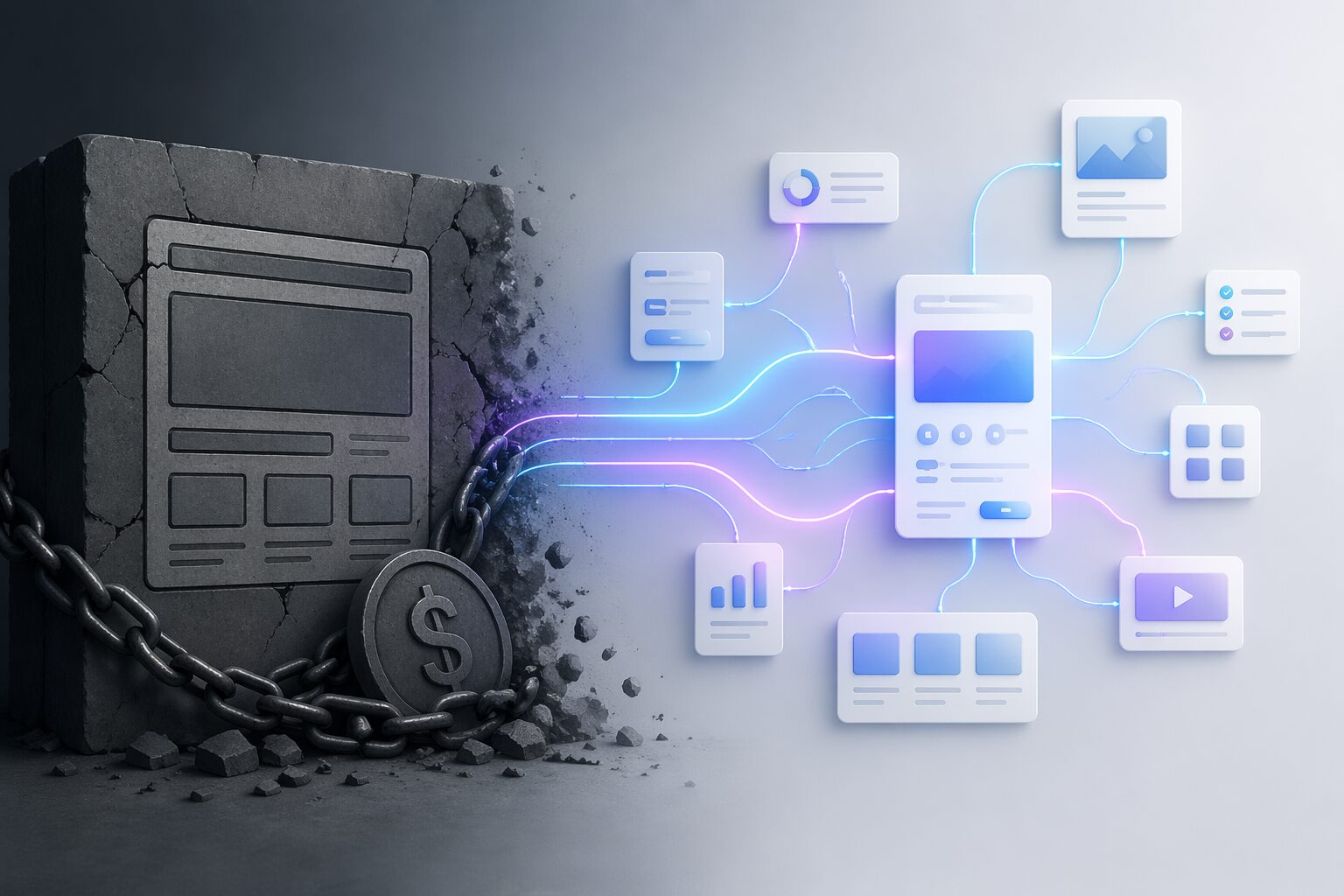
You do not overhaul your entire organizational structure simply because one department underperforms. Likewise, you do not discard decades of brand equity because your mobile application interface feels outdated. The executive solution to this disconnect is a digital brand refresh. It is not a volatile, rip-and-replace rebrand. A digital brand refresh is a targeted update to your online presence that modernizes visual elements, enhances user experience, and aligns messaging with current market trends without fully replacing your established brand identity.
Executives who understand digital leverage this approach to recapture market attention and optimize conversion funnels. Initiating a digital brand refresh improves the look, feel, and messaging of your brand online while bypassing the massive operational risks associated with starting from scratch. We will walk you through what a digital brand refresh entails, why it immediately impacts your bottom line, and how to execute it effectively to stay competitive and appealing in a demanding market.
The Financial Risks of Delaying a Digital Brand Refresh in the MENA Market
The Middle East and North Africa region operates on accelerated digital timelines compared to the US or European markets. In the US and EU, legacy brands often rely on generational loyalty, and consumers tolerate friction because switching costs or entrenched habits hold them back. In MENA, digital agility overrides legacy loyalty. We have the highest smartphone penetration rates globally, and consumer expectations are shaped entirely by seamless, digital-native disruptors.
When regional enterprises fail to initiate a timely digital brand refresh, they bleed revenue. The symptoms are visible on the balance sheet: rising customer acquisition costs, plummeting engagement rates, and a steady loss of market share to younger, more agile competitors. A brand that looks tired online signals an operational deficit. Customers equate an outdated visual interface with weak security, slow service, and a lack of innovation. In an environment where a competitor’s app is only a swipe away, visual stagnation is a direct threat to retention.
Building a competitive digital experience requires continuous calibration. Delaying a digital brand refresh forces marketing teams to spend aggressively just to maintain the status quo. Ad campaigns push traffic to digital environments that fail to convert because the visual hierarchy is chaotic, the messaging misaligns with current consumer priorities, and the user experience feels disjointed. The cost of doing nothing far exceeds the investment required for a targeted modernization effort.
Identifying When a Digital Brand Refresh Is Mandatory
Executives must recognize the operational signals that mandate a digital brand refresh. High bounce rates on primary landing pages, negative sentiment in audience feedback, and a glaring visual disparity between your digital presence and that of market leaders are immediate red flags. Furthermore, if your company has recently launched new product lines or entered new markets, but your digital messaging still reflects an older business model, a digital brand refresh bridges the gap between what you sell and how you are perceived.
Why Outdated Brand Architectures Block a Meaningful Digital Brand Refresh
Many executive teams hesitate to approve updates because they confuse a digital brand refresh with a complete corporate rebranding. A full rebrand involves altering the core DNA of the company: changing the name, abandoning the logo, rewriting the mission statement, and restructuring the corporate identity from the ground up. It is an expensive, high-risk endeavor that can alienate an existing customer base if executed poorly.
A digital brand refresh is fundamentally different. It involves updating your brand’s online presence—from your website and social media to digital marketing materials—without overhauling the entire brand identity. You retain the core logo and foundational colors that carry your brand equity. What changes is the application of those elements in the digital space. You introduce modernized typography engineered for mobile readability, expand the digital color palette for better accessibility, optimize user interface components, and sharpen your micro-copy to align with how users consume information today.
When an organization operates with outdated brand architectures, designers and developers are forced to force-fit print-era brand guidelines onto digital interfaces. This creates friction. Print guidelines do not account for hover states, dark modes, responsive grids, or mobile accessibility standards. A digital brand refresh liberates your product teams from these legacy constraints. It provides them with a modern toolkit designed explicitly for the screen, allowing them to build faster, test more efficiently, and deploy updates that look cohesive across every digital touchpoint.
Overcoming Stakeholder Resistance to a Digital Brand Refresh
Stakeholder alignment is critical when updating visual elements. Board members often view brand updates as unnecessary cosmetic exercises. To secure buy-in, leadership must position the digital brand refresh as a business optimization strategy. By demonstrating that a refreshed digital presence directly influences user trust, accelerates development cycles through a unified design system, and increases digital conversions, the conversation shifts from subjective aesthetics to measurable financial outcomes.
How to Execute a Strategic Digital Brand Refresh Without Disrupting Operations
Execution separates a successful digital brand refresh from an expensive design experiment. Enterprise leaders cannot afford to pause digital operations or confuse their active customer base during an update. A structured, phased approach guarantees that the transition enhances the user experience rather than disrupting it. As MENA’s first UX Design and Innovation Agency, webkeyz approaches this process through a rigorous methodology that protects business continuity.
The first critical step is to conduct a brand audit. You must assess the current state of your digital presence with absolute objectivity. This involves analyzing audience feedback, conducting heuristic evaluations of your digital platforms, and auditing competitors to benchmark your visual and functional standing in the market. Utilizing an advanced UX Research & Lab allows enterprise teams to gather empirical data on exactly where the current brand presentation fails users.
Following the audit, leadership must set clear objectives. A digital brand refresh fails when the goal is simply “to look better.” You must identify exactly what you want to achieve with the refresh. Whether the objective is increasing engagement across mobile channels, improving brand recognition in a new demographic, or boosting conversions on key product pages, these goals dictate the design strategy.
Planning the Digital Brand Refresh Lifecycle
With objectives locked, you move to planning execution. This requires defining the scope of the updates, mapping out which digital properties will be refreshed first, and establishing a realistic timeline. Stakeholder collaboration ensures that marketing, product, and IT teams remain aligned. Cross-functional collaboration eliminates the risk of designers creating visual assets that developers cannot implement within the existing technical infrastructure.
Testing serves as the final safeguard before a public launch. A digital brand refresh must never be pushed live based on assumptions. By deploying multivariate testing on updated visual elements and conducting usability tests on the enhanced user experiences, you validate that the modernized look and feel actually performs better than the legacy version.
Establishing Baseline Metrics for a Digital Brand Refresh
You cannot manage what you do not measure. Before deploying any visual updates, executives must establish baseline metrics for the digital brand refresh. This involves capturing current data on session duration, bounce rates, conversion metrics, and search engine optimization rankings. Post-launch, these same metrics serve as the definitive proof of ROI. A successful refresh will consistently yield higher engagement metrics, proving that the modernized visual elements successfully captured and retained user attention.
Measuring the Business Impact of a Targeted Digital Brand Refresh
The positive outcomes of a successful digital brand refresh extend far beyond aesthetics. When executed strategically, a digital brand refresh directly impacts revenue generation, market perception, and operational efficiency. By modernizing visual elements and enhancing user experiences, enterprises eliminate the friction that causes cart abandonment and digital churn.
Improved engagement is the most immediate benefit. When users encounter an interface that feels modern, intuitive, and visually cohesive, they spend more time interacting with the platform. This increased dwell time translates into improved brand perception. Customers instinctively trust platforms that look sophisticated and function flawlessly. According to McKinsey, companies that consistently invest in design and modernized user experiences yield significantly higher revenue growth and shareholder returns than their industry counterparts. Design is a measurable business asset, not an arbitrary overhead cost.
Furthermore, a digital brand refresh frequently drives improvements in Search Engine Optimization. Modernizing digital platforms often involves restructuring semantic code, optimizing image delivery, and improving Core Web Vitals alongside the visual updates. Search engines prioritize sites that offer superior user experiences. A faster, cleaner, more accessible digital presence climbs search rankings, reducing reliance on paid acquisition channels.
Customer loyalty solidifies when your brand remains relevant to their evolving expectations. Gartner research underscores that strong, cohesive brand management across digital touchpoints is a primary driver of customer retention and trust. When your messaging aligns with current market trends and your visual identity feels current, customers feel validated in their choice to do business with you.
Real-Life Examples of Successful Digital Brand Refreshes
Highlighting real-world examples clarifies the impact of this strategy. Consider global financial institutions that have successfully refreshed their digital presence. Many legacy banks recognized that their heavy, corporate visual identities were losing ground to nimble fintech startups. Instead of abandoning their heritage, they executed a digital brand refresh. They kept their established logos but introduced lighter interfaces, simplified micro-copy, and highly responsive mobile components.
Similarly, in the MENA telecom sector, leading operators have periodically refreshed their digital brands to shift their positioning from traditional infrastructure providers to modern digital lifestyle brands. By updating their digital marketing materials, refining their application interfaces, and aligning their messaging with the digital-first habits of Gen Z consumers, these enterprises successfully defended their market share without the massive risk of a total corporate rebrand.
The Executive Mandate for Approving Your Next Digital Brand Refresh
Staying relevant in a dynamic digital landscape requires constant vigilance. Consumer expectations will never regress to the standards of the past. As new technologies emerge and market demands evolve, the visual and functional presentation of your digital platforms must evolve in tandem. A static brand is a declining brand.
Periodically refreshing your brand is an executive mandate to secure market dominance. It proves to your audience that your organization is active, innovative, and deeply invested in delivering value. A digital brand refresh mitigates the risk of irrelevance, protects the equity you have built, and arms your product teams with the modern tools they need to drive measurable business growth.
To explore how our enterprise methodologies can modernize your digital presence and drive measurable outcomes, review our recent work.